 Trying to make the space between a Pandora and a deck of cards, both responded to my pleasant duty , though with a festive late, updating the blog and talking about pedagogy idealist.
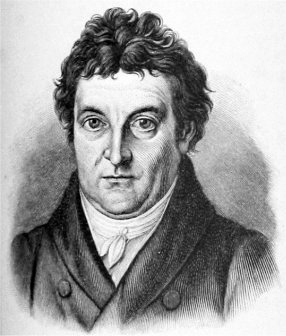
 The author of temporal reference in this excursus is, drum roll, -3 -2 -1 .... Happy New Year! ... Ah, no, sorry, cmq Greetings!, I said ... the author was Johann Gottlieb Fichte.
near contemporary of Kant, it draws much of its theoretical and its own against what he pursues is not just a simple attack of refutation of ideas but it is an attack that is revolutionizing the global framework of thought and perception of reality .
The real fact, or nature, the existence and to be included Kant had always been designed and placed as external to man. The big challenge was in fact know this fact, find the research tools, techniques, even verbal, to argue about being and its truth and certainty. This had also
Kant in his criticism, however, touching a button, very delicate since its conception, tied all'inconoscibilità of what is separate from the senses, it has reason to be. It seems clear that this statement, because it is difficult to understand, could not help but lead to conflict. Kant himself explained that his firm limit the concept of the thing itself guaranteed to 'I think to be exclusively legislature and not the nature of her creator. This role but, in an attempt to overcome the aporia of something unknowable but is existent and is usurped by all Fiche 'I .
L 'I , new entity that philosophy thinks and admits in his "manual", addresses the difficult concept of the thing itself being included in it and, thus, the connotation of certain characteristics, such as' be infinite and being creative.
- The infinite self is an entity that has no limits (including those related to knowledge);
- The ego is a body maker because the only way to have no limits of knowledge is to create anything like the ' single way to be infinite is possible to place limits within himself.
summary, we have some two moments and one that we solve it now: There is only
- I think the ego is the subject
- (concluded) requires a constant dynamic between the first and second
translate what was said in language that our philosophy and we get three times when the self becomes a reality:
- VIEW: the ego posits itself (or the infinite being and creator who said ;
- ANTITESI: self generates in himself the non-ego (or generates its opposite, the opposite of being creative and infinite, then a created thing and finished but it can not exist outside ego itself);
- SUMMARY: The I depend on no-self and the not-I depends on the ego (this is a necessary dynamics to ensure that I am not the only pure act rationally but , and comparing this with the matter, we all become reality, nature).
So far, there is the philosophical part. In education?
Just take the previous three stages, associated with moral that these three components are, for the thesis' the absolute duty in freedom (very reminiscent of Kant), the antithesis to the matter, instinct, the company (what is the opposite of the absolute duty, where everything is instead affected by other external components) and, for the dynamic between self and non-ego, the 'moral autonomy sign, however, not only by a simple dynamic of a continuous effort that I should make towards the non-I try to always prevail.


0 comments:
Post a Comment